The Differentiated Product
The same core product becomes a different whole product for each customer segment, because each segment's constraints decide which enablers and differentiators matter.
Contents
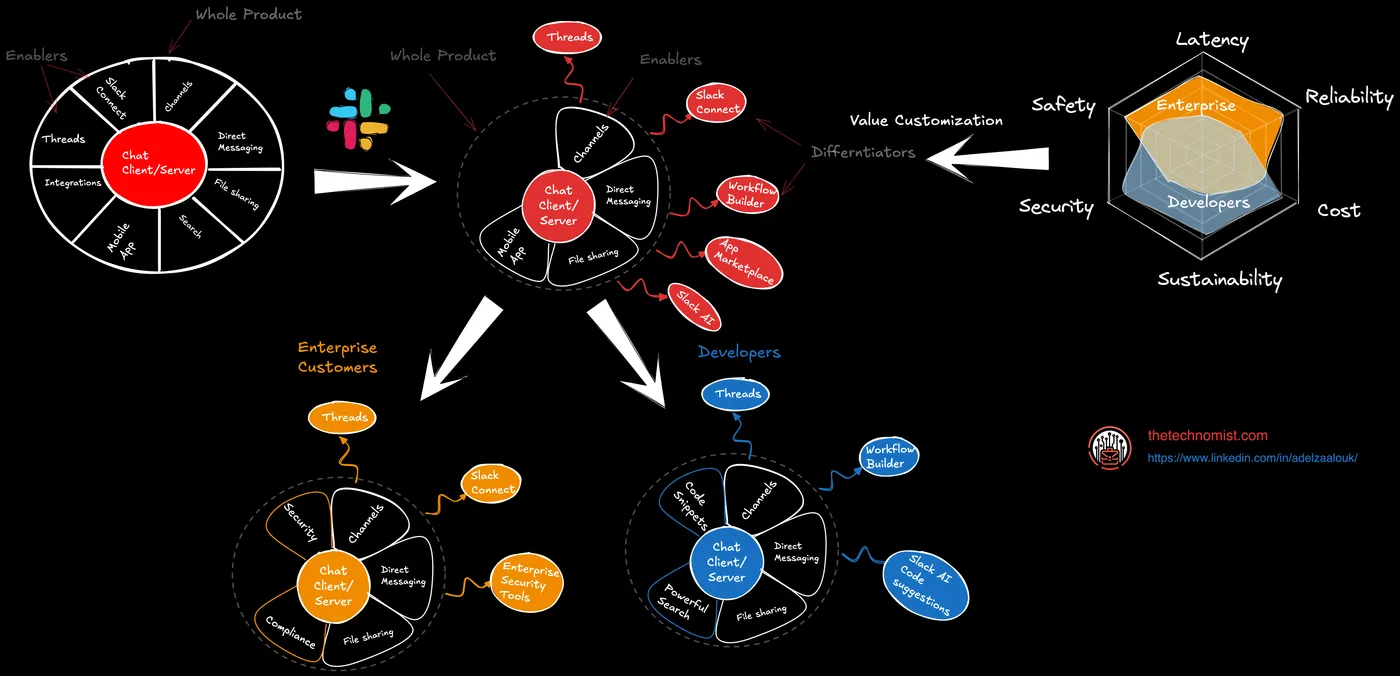
Use it when Two customer segments want the same product and you need to decide which features and differentiators to emphasize for each.
The diagram uses Slack: a chat client/server at the core, enablers around it (channels, direct messaging, file sharing, mobile app), and differentiators at the edges (threads, Slack Connect, workflow builder, app marketplace, Slack AI).
A radar chart of latency, reliability, cost, sustainability, security and safety shapes that one product into two:
- Enterprise customers get security and compliance petals, with Slack Connect and enterprise security tools as differentiators.
- Developers get code snippets and powerful search, with workflow builder and Slack AI code suggestions.
In the long post’s words, “the constraint being imposed defines the core value proposition of the product.” The Slack features are for illustration only.
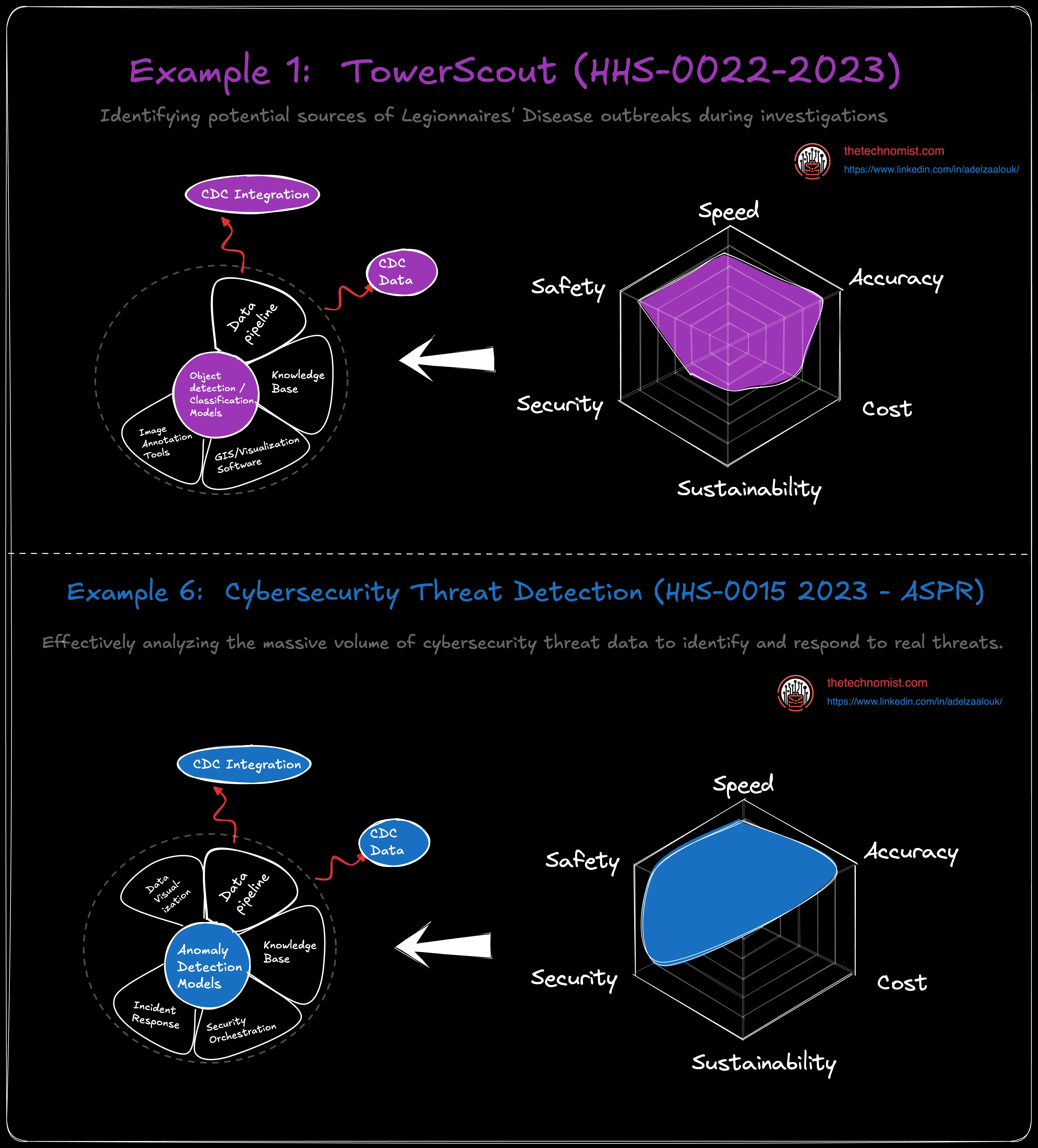
The same model works for AI systems. TowerScout identifies potential sources of Legionnaires’ Disease outbreaks; a second system detects cybersecurity threats. Each has a model at the core, enablers such as a data pipeline and a knowledge base, differentiators at the edges, and its own constraint profile across speed, accuracy, cost, sustainability, security and safety.