AI Market Dynamics
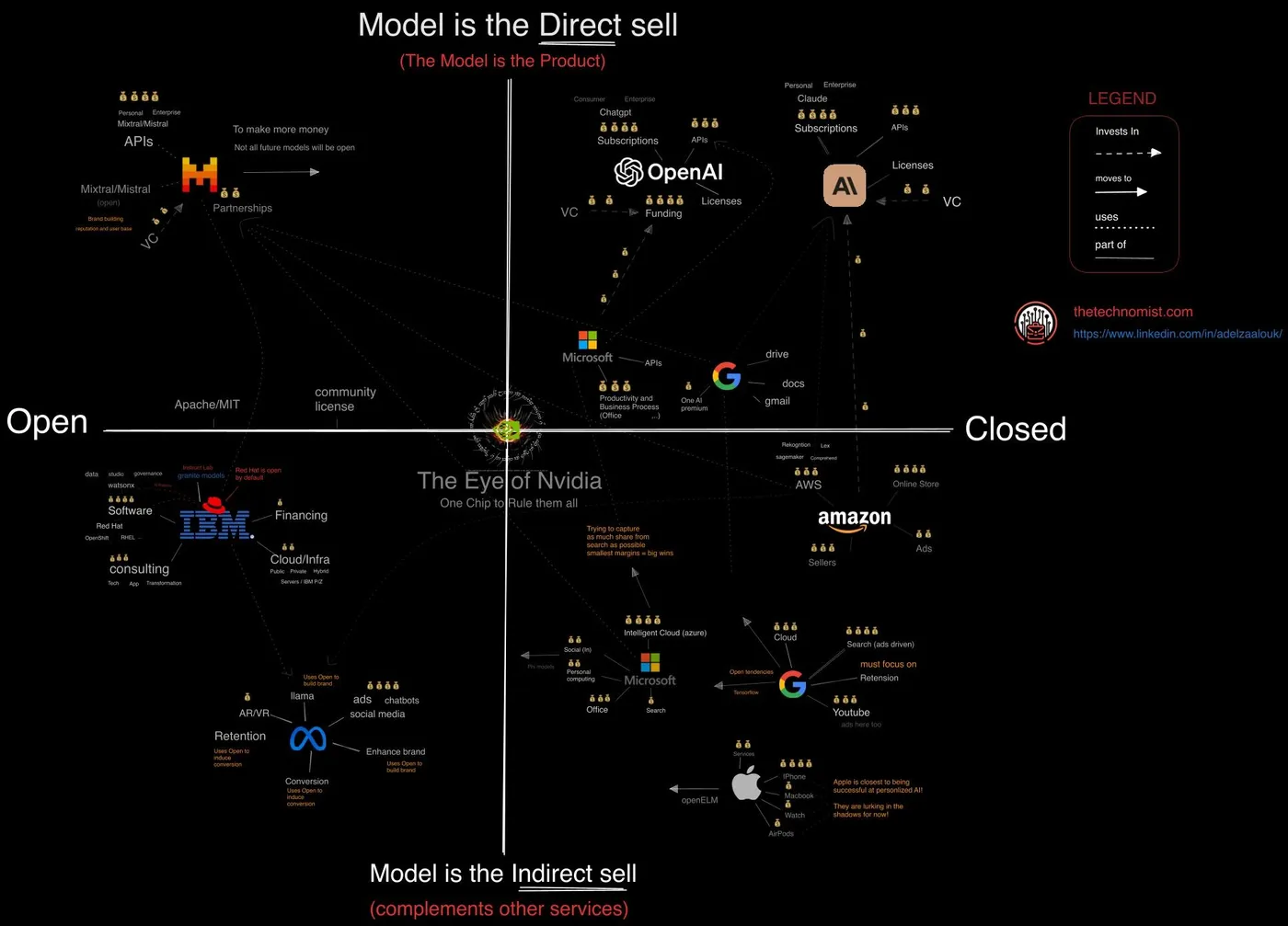
Place any AI company on two axes: how open its models are, and whether the model is the product or a complement to other services.
Contents
Use it when Sizing up an AI vendor or competitor and asking how it actually makes money from models.
Two questions place any AI company on the map:
- How open are its models? Open models share weights, code or architecture under permissive or community licenses. Closed models are proprietary, and the model is usually the moat.
- How does the model make money? In a direct business model, companies monetize the model through subscriptions, licenses or APIs: the model is the product. In an indirect one, the model enhances existing products and services such as software, cloud, search or advertising: the model is the proxy.
The players: incumbents (IBM, Google, Meta, Microsoft, AWS, Apple) and new entrants (Mistral, OpenAI, Anthropic) land in different quadrants, from direct API sales to AI that complements software, products and ads.
Use it to understand the AI market, or to decide where your own AI venture should sit.