The AI Value Chain
From silicon to software, each layer of the AI stack adds value by building on the raw material of the layer below, and each layer multiplies the one beneath it.
Contents
Use it when Working out where a company sits in the AI stack, what it buys, what it sells, and whose success it depends on.
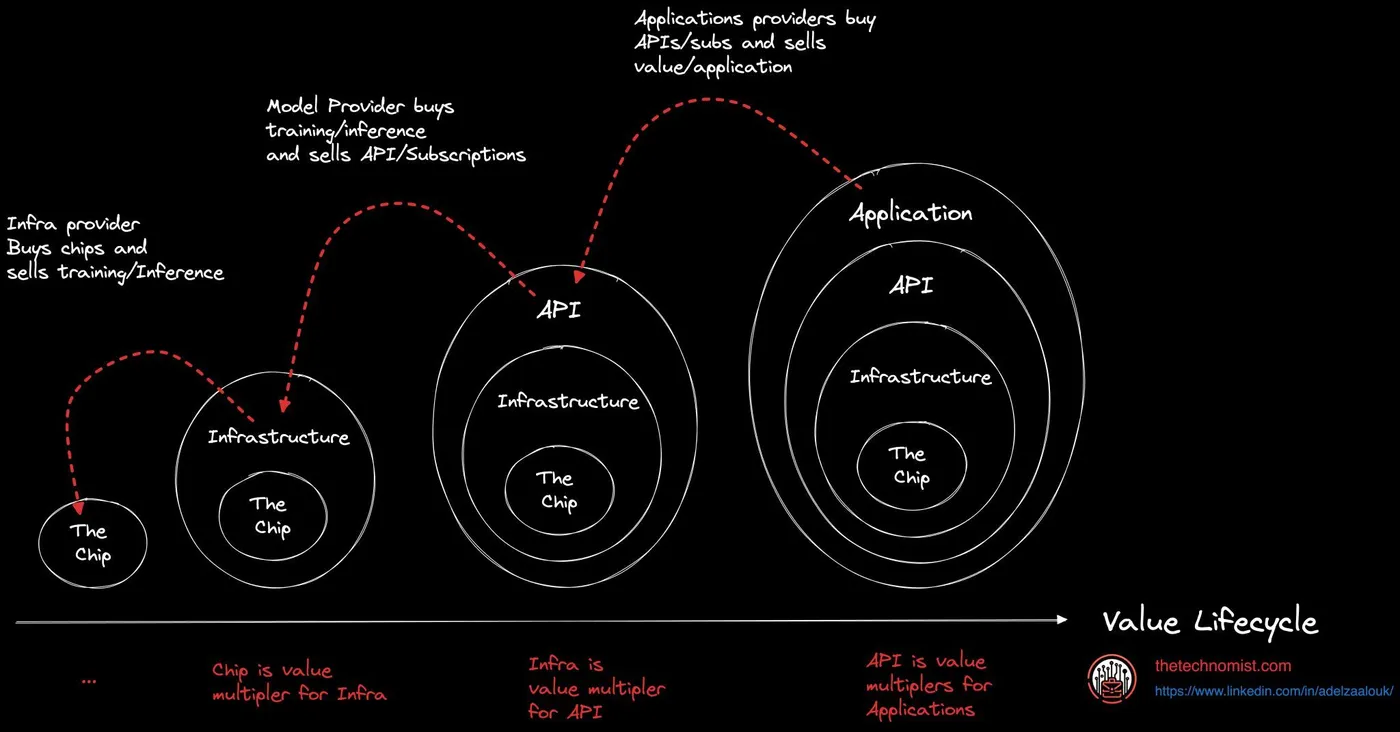
From silicon to software, each layer of the stack adds value by leveraging the “raw material” of the layer below.
- For the cloud providers (IBM, AWS, GCP, Azure), the raw material is the NVIDIA chip (or the AMD, the Intel).
- For the model and inference API providers like Claude, OpenAI and Mistral, it is the infra to train and serve.
- For the startups, wrappers and application providers, it is the inference APIs, and the chain continues.
Each layer is a value multiplier for the next one. The success of the provider hinges on the success of the consumer and vice versa, with varying dependencies.