Route Review by Stakes
AI sped up writing code, not understanding it. Route review by blast radius: senior eyes on the code that can do damage, AI on the rest.
Contents
Use it when Your review queue has tripled since the team adopted AI coding tools and seniors are reviewing CSS changes.
The bottleneck shifted. Writing code used to be the expensive part. Looking at a diff and saying “I understand what this does, and I’m confident it’s correct” is still a senior skill.
A bug in your auth middleware causes a security breach. A bug in your log formatter causes ugly timestamps. Both sit in the same review queue. Complexity alone doesn’t tell you the risk; blast radius does.
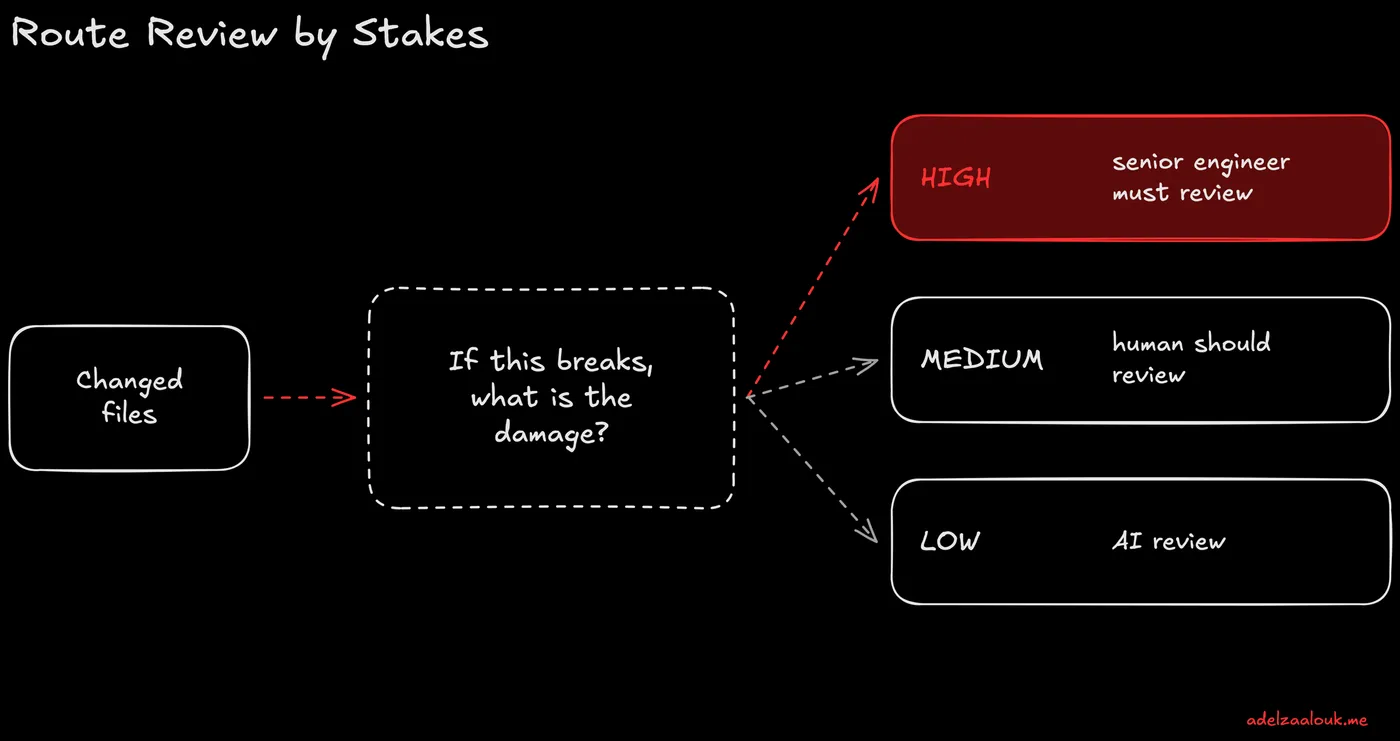
Ask one question of every file: if this breaks, what is the damage? Then route:
- HIGH: a senior must review.
- MEDIUM: a human should review.
- LOW: delegate to AI review.
Static analysis sees structure, not purpose. Adding an LLM’s answer to that question turned a repo where every file scored LOW into 30 HIGH, 141 MEDIUM and 134 LOW.
This isn’t replacing human review, it’s routing it. The senior engineer who reviewed 20 PRs a day now reviews the 5 that actually need them.