The Correction Loop
Capture every correction, attribute it to the skill that caused it, and let a human decide what the agent remembers.
Contents
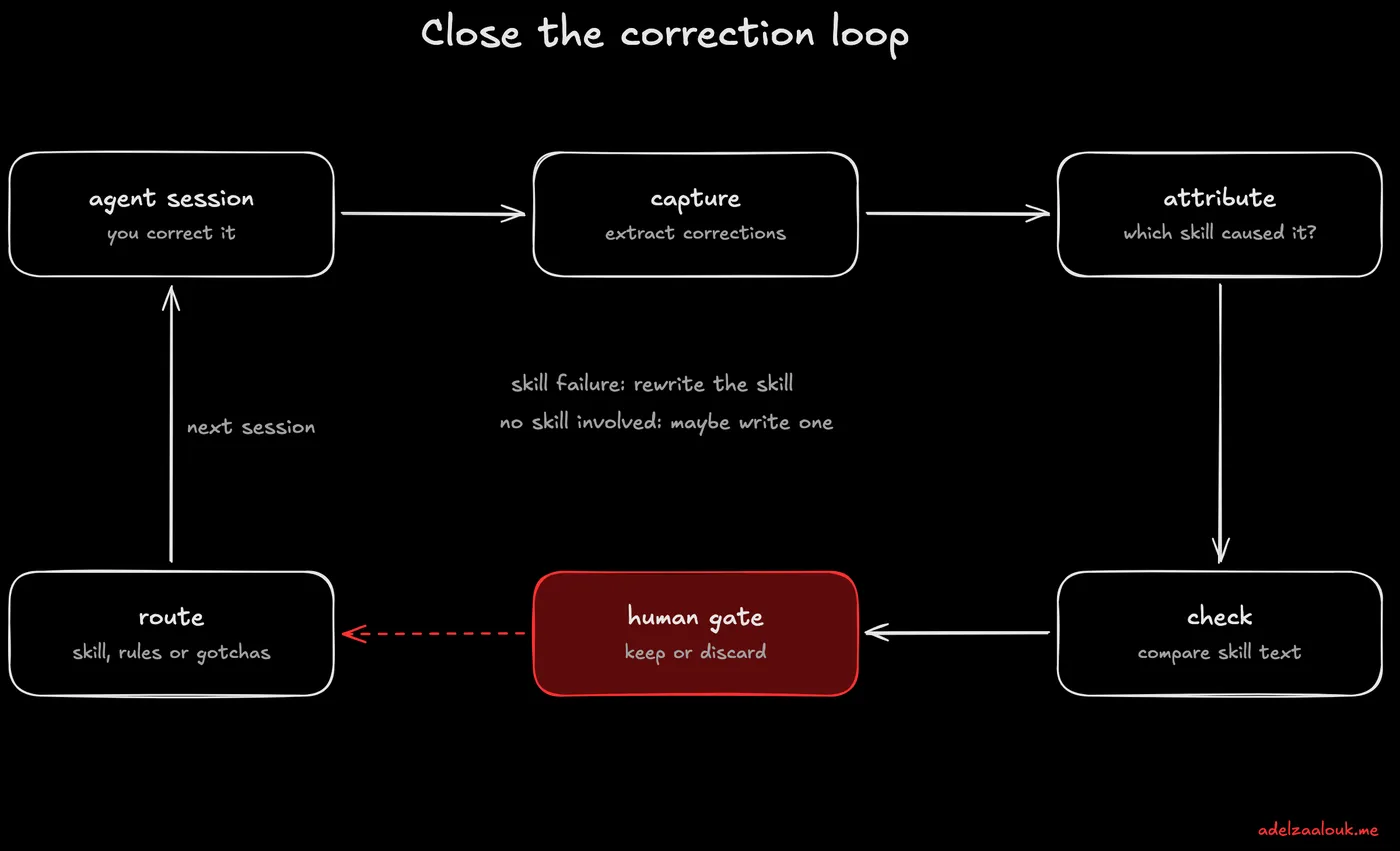
Use it when You keep correcting your coding agent for the same mistake, session after session.
Agents don’t remember being wrong. You correct it, it adapts, the session ends, and tomorrow brings the same mistake. You are the only memory in the system.
Capture failures, attribute them to their causes, close the loop.
- Capture. After every session, extract the corrections and the patterns behind them.
- Attribute. Find which skill, if any, the agent was following when it went wrong. Skill failure means rewrite the skill. No skill involved means maybe write one.
- Check. Before flagging a skill, compare its current text against the correction. Timestamps tell you when a file changed, not what changed.
- Route. Every learning has a home. Keep each file lean; your context budget is the scarcest resource.
Data replaces intuition. A skill invoked often with zero corrections is doing its job. One with frequent corrections needs surgery.
Keep the human gate. The judgment about what to remember is the one thing that should stay human. An agent that remembers everything learns nothing.