Compound AI Moats
If everyone has the same models, the model is not the moat. Single moats are fragile; stack data, specialization, distribution and network effects into a compound one.
Contents
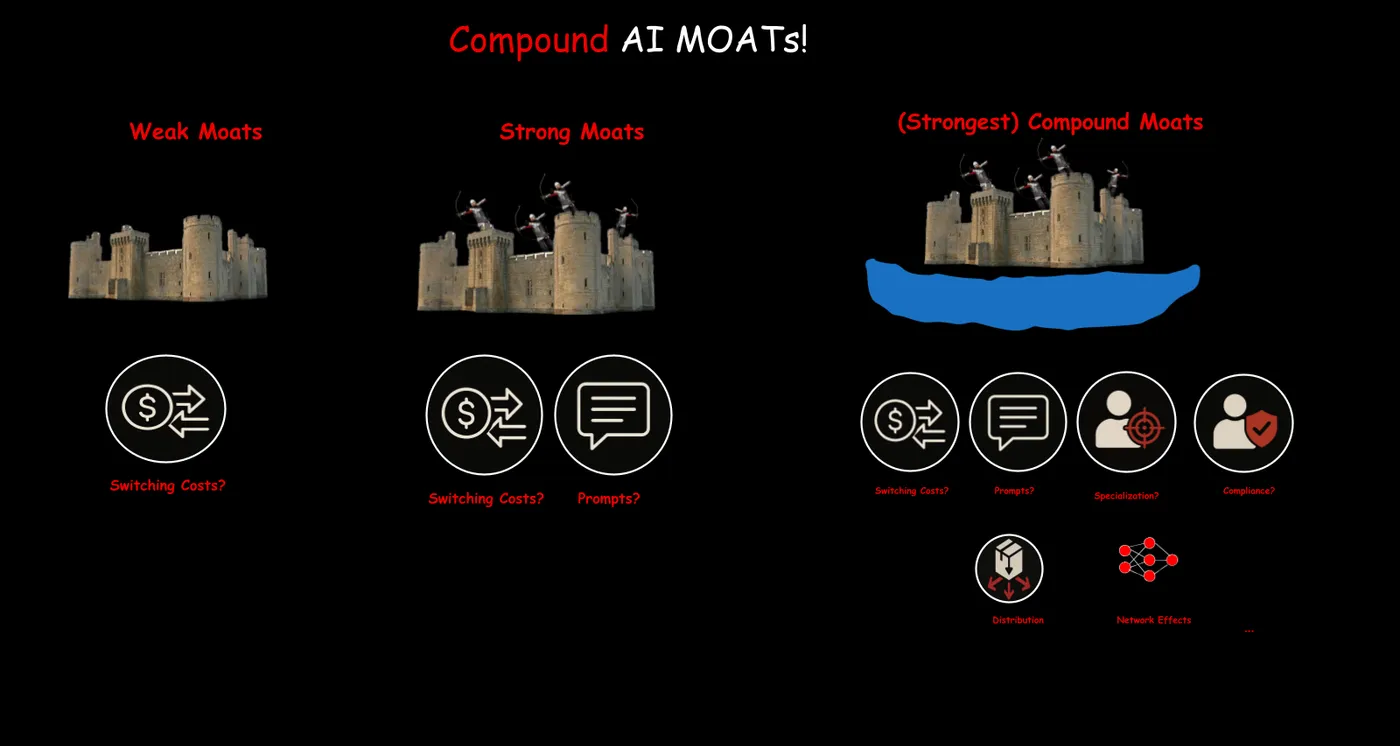
Use it when Someone asks what stops a competitor from rebuilding your AI product on the same model next quarter.
Everyone can build with AI right now. If everyone has access to the same intelligence, what sets you apart?
The moats that hold:
- Data. Proprietary data nobody else has.
- Specialization and workflow depth. A Kubernetes troubleshooting agent built by people who have done Kubernetes operations for a decade beats one built by a team that just learned it.
- Network effects. More users, more data, better products, more users.
- Distribution. Whoever controls the entry point controls the relationship with the user.
Stack them. Switching costs alone are a weak moat. Compliance alone is a weak moat. Prompts alone are a weak moat. Combine them with specialized data, network effects and distribution and you get a compound moat, much harder to break through.
The harness belongs on that list too: the tuned system prompts, orchestration policies and tool configurations a competitor cannot replicate by switching models.
Standards create the floor, not the ceiling. The standard prevents lock-in. The differentiation generates revenue.